
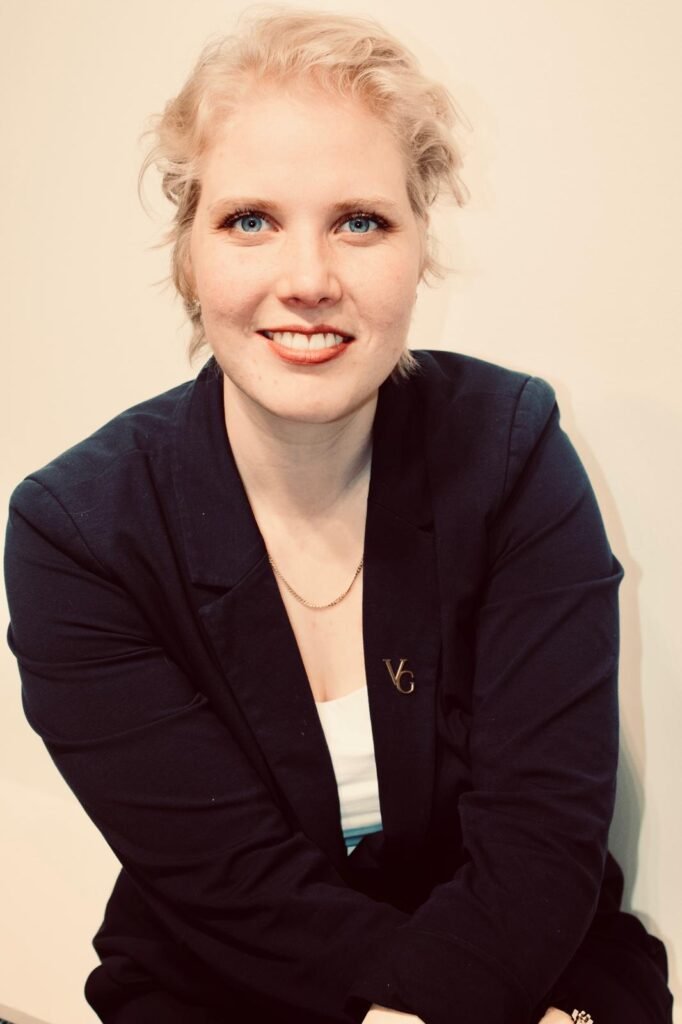
Viviane Brugger
« I want to see people free instead of making them manage their problems »
Who is she ?
Viviane has over 10 years of professional expertise in Europe (500+ patients).
Focusing on treating substance use disorder, emotional dysregulation, ADHD
and depression without the use of medication – where
usually medication is required. She uses her professional experience as it were a tool-kid. Her mission is not to apply a system, but to solve problems by using the right tool. Even if it means to challenge the norm.
Viviane is expanding her sphere of influence to the English speaking
countries by further training in the US.
…
Our goal is to connect with other christian professionals to improve the care in this field of mental health.

What is she solving ?
Her main focus is on:
Substance use disorder (SUD) has many roots, it expresses a form of disconnect and often leads to isolation
in all areas of life (self, family, job, finances).
…
If you choose to work with her you will reconnecting with true values and attain (forgotten) goals.
By reconnecting with your core values, excuses and double standards begin to transform. This reconnection allows truth to order overwhelming feelings of isolation and loneliness, there are premeditated options to deal with moments of strong emotion like anger or fear. As you align with the truth, decisions become easier and neurological toxins decrease.
By helping you attaining goals, you can stay aware of your progress and recognize each step of your success. This continuous tracking builds confidence and reinforces motivation, gradually nurturing a genuine hope for change. As achievements accumulate, even small ones, they become powerful reminders that growth is possible and that transformation is within reach.
By seeing the joy in other people through you neurological structures will start to rewire as you give. Through thanksgiving you can open neurological blockages and align emotion with cognition (values). My faith is that Jesus continues the good work He has started in you. So, in prayer we will be able to remove obstacles and reduce environmental as well as social interferences that can weigh on daily life.
Why does she work differently ?
Instead of long-term treatments, she rather works with fewer patients with more intensity so that in seven to ten months changes are visible.
…
If you choose to work with her, you can expect a high responsiveness via phone and flexibel availability.

She came to realize that many treatments in substance use disorder are built around rigid systems that often create an artificial dependence on the environment and the structures themselves. Rather than fostering true autonomy, these approaches can limit personal growth. In response, she offers practical tools designed to strengthen social confidence, empowering individuals to rebuild independence, trust their own abilities, and engage with the world more freely.

Sometimes, symptoms are not obstacles to be eliminated but signals pointing toward a deeper solution. They can reveal unmet needs, unresolved conflicts, or hidden struggles asking to be acknowledged. She offers support in helping you name and understand the challenges behind the symptoms, transforming confusion into clarity and allowing meaningful healing to begin at its source.

Often, progress is limited by the absence of clear role models demonstrating healthy and effective behaviors. Without practical examples, it can be difficult to translate theory into real-life change. She offers direct online exchanges focused on lifestyle habits, creating a space where guidance becomes concrete and easily transferable into daily life.

Diagnosis can be useful in identifying and naming symptoms, offering a framework to better understand what is being experienced. However, she often challenges diagnosis when it becomes an easy or limiting explanation rather than a starting point for deeper understanding. By questioning labels, she encourages a more nuanced approach that looks beyond definitions to address the individual’s unique story and needs.
How she works with you ?
Identifying your state at the beginning is a crucial first step in any process of change. It involves taking an honest and compassionate look at your current emotional, mental, physical, and social condition. By recognizing patterns, challenges, strengths, and limitations as they truly are, you create a clear starting point. This awareness allows progress to be measured meaningfully and ensures that the path forward is grounded in reality rather than assumptions.
Learning how to name the problems rather than the symptoms is a key step toward meaningful change. Symptoms often represent surface expressions of deeper issues, while the true problems lie beneath them. By shifting focus from what is felt to what is causing it, this process encourages clarity, responsibility, and understanding. Properly naming the underlying challenges allows for more effective actions and prevents solutions from addressing only temporary discomfort instead of lasting resolution.
Choosing and reconnecting with your values is a foundational step in creating lasting alignment and purpose. It requires identifying what truly matters to you beyond external expectations or immediate pressures. By consciously reconnecting with these core values, you establish a stable inner compass that guides decisions, behaviors, and relationships. This alignment helps restore coherence between who you are and how you live, fostering clarity, integrity, and a deeper sense of meaning.
Evaluating and measuring change as success is essential to recognize progress and maintain motivation. By reflecting on the growth you’ve achieved, you gain clarity on what works and build confidence in your ability to evolve. This conscious assessment allows you to celebrate milestones, however small, reinforcing positive habits. Once progress is acknowledged, applying this growth to a new area becomes a natural next step, expanding your development and creating momentum for continuous improvement across different aspects of your life.
Practice Area
Yourself
Reconnecting
Attaining goals
Prayers
Charity
© 2026 Created by WIDEEL